Last updated 2026-08-20
TL;DR
A rigger picks slings and hardware, inspects them, and connects loads so a crane or hoist can move them without hurting anyone. OSHA does not issue a national rigger license. You start by getting hired around lifts, learning 29 CFR 1926.251 and Subpart CC, and proving you are a qualified person. Some employers want NCCCO Rigger I. A few cities license the trade. Confirm every fee and card with the board that issued it.
What is a rigger?
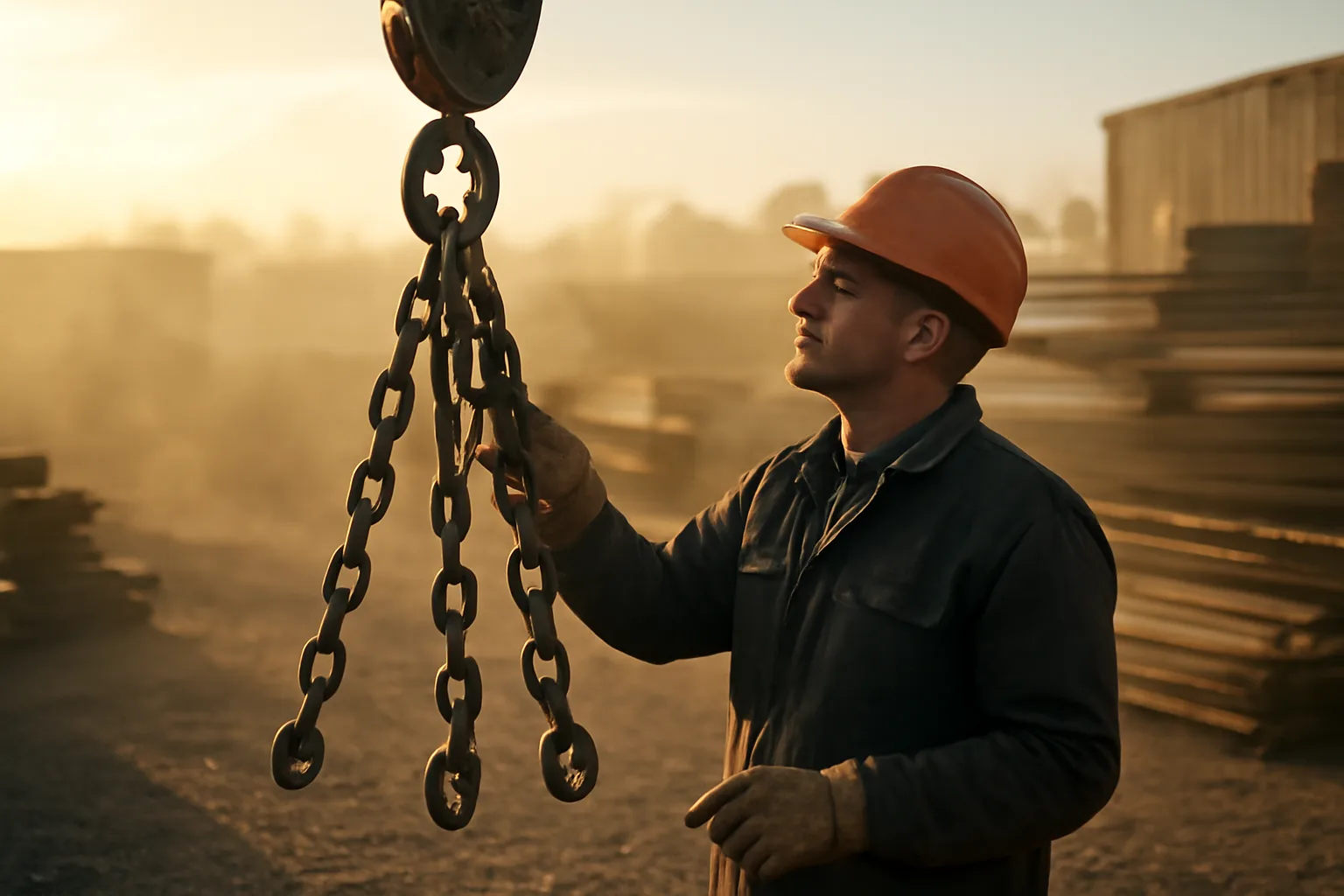
A rigger picks the slings and hardware, inspects that gear, and connects a load to a crane, hoist, or other lifting device so the load moves on purpose and not into a person. That is the job. It is not a personality type.
On a steel job the rigger reads the load, picks a hitch, checks the angles, and stays out of the fall zone unless the standard lets them in. On a plant outage the same person may write the lift steps for a motor that has not moved in twenty years. Shipyard riggers run a lot of chain falls and come-alongs in tight compartments. The tools change. The judgment does not.
The Bureau of Labor Statistics tracks the occupation as Riggers, SOC 49-9096. [7] Plenty of people who rig every day never show up in that code. Ironworkers, millwrights, and millwright helpers rig constantly and get counted in other occupations. [8] Do not plan your rent around one wage table.
People mix the word up with crane operator. Different job. The operator runs the machine. The rigger makes the load legal to pick. OSHA is blunt that holding an operator card does not make you a qualified rigger. [4]
If you like mechanical puzzles, hate sloppy work, and can look a superintendent in the eye and say two tired chokers are not a plan, you will like this. If you want a wallet card you can wave and then stop thinking, pick another trade.
That is the work. The paper path is a separate problem, and most internet advice gets it wrong.
How do you start as a rigger?
You start by getting next to the work, not by buying a laminated card.
Find a contractor, a shop, a shipyard, or a union hall that actually hoists things. Tell them you will pull, coil, and inspect all day if someone lets you watch the load math. A registered apprenticeship in ironwork or a related craft is the cleanest paid path I know, because you get hours plus classroom time that already covers slings and signaling. [9]
Read 29 CFR 1926.251 until you can recite the inspection rule. [5] Then read Subpart CC, especially the qualified rigger definition and the fall zone rules. [1][3] You do not need a lawyer for this. You need a printed copy and a highlighter.
Ask the competent person on your crew to watch you build three simple hitches and reject your own gear. If they will not teach, you are on the wrong crew.
Some employers will not let you touch a load until you pass NCCCO Rigger Level I. That is a company rule, not a federal license. Confirm their written policy. If you are comparing third party cards later, the companion notes in rigger guide 17 and rigger guide 23 walk through how those stacks differ.
Do not quit a paying helper job to sit in a hotel class. Learn the names of the hardware first. Shackle, master link, eye bolt, turnbuckle, wire rope sling, web sling, chain sling. Learn what a broken splice looks like. Then sit for an exam if a gatekeeper demands it.
City work is the exception. New York City licenses Master Riggers and Special Riggers through the Department of Buildings. That is real paper with experience gates. Confirm current forms and fees on the DOB licensing pages before you move for that market. [11]
How you start, in one line: get hired around lifts, study the OSHA text, document what you have done, and add a third party exam only when someone with a job order requires it.
Does OSHA require a national rigger license?
No. OSHA does not issue a rigger license and does not name NCCCO, NCCER, or any other brand as the only legal path.
What OSHA requires on construction crane work is a qualified rigger for specific tasks. Assembly and disassembly of a crane needs one. [2] Hooking, unhooking, or guiding a load, or making the initial connection of a load, needs one when workers are in the fall zone. [3] General industry sling work still has to follow 29 CFR 1910.184. [6]
The federal crane rule in 29 CFR 1926 Subpart CC took effect in 2010. [12] It changed how contractors staff lifts. It did not create a national rigger department that mails cards.
If a recruiter tells you "OSHA requires NCCCO," they are mixing a common owner spec with the law. Ask them to point at the clause. If they cannot, treat it as their bidding rule, not as a statute.
You still have to be qualified. That word has a real definition. We will get to it next.
What is a qualified rigger under OSHA?
A qualified rigger is a rigger who meets OSHA's test for a qualified person. The agency does not grade your Instagram. It cares whether you can solve the rigging problem in front of you.
29 CFR 1926.1401 says, in the definition itself, "Qualified rigger is a rigger who meets the criteria for a qualified person." [1] A qualified person, in the same section, is someone who by degree, certificate, professional standing, or extensive knowledge, training, and experience has "successfully demonstrated the ability to solve/resolve problems relating to the subject matter, the work, or the project." [1]
That last clause is the whole game. A weekend class with no loads is a weak demonstration. Five years hanging iron with a lead who made you reject bad gear is a strong one. A third party certificate can help you prove it. It is not magic.
OSHA's own fact sheet is even blunter: "A certified crane operator does not necessarily meet the requirements of a qualified rigger." [4] Employers decide, task by task, whether you are qualified for that hitch, that load, that piece of hardware.
Write down what you have done. Date it. Note the gear, the approximate weight, and who watched you. When a safety manager asks why you are qualified, you want a folder, not a shrug.
Do you need NCCCO rigger certification to work?
Only if the employer, the owner, the union hall, or a city rule says so. OSHA does not.
NCCCO offers Rigger Level I and Rigger Level II. Both are third party exams with written and practical pieces, and the certification period is five years. [13] Confirm the current candidate handbook for domains, retake rules, and fees. Those numbers move. I will not invent them here.
Level I is the card most new people get pushed toward. Basic hitches, hardware ID, inspection, load control. Level II is the more complex work. If a job order lists Level II and you only hold I, you will sit.
I would sit for Level I once a real contractor names it as a gate. I would not pay for it on speculation while you are still learning what a sling angle does to tension. A lot of first year money disappears in hotel ballrooms.
NCCER and some employers run their own rigger assessments. Those can open doors on industrial sites that never heard of NCCCO. Compare the actual bid language, not forum lore. rigger guide 29 and rigger guide 41 are the next stops if you are stacking cards against each other.
What paper do employers actually ask for?
It depends on who is paying and who is watching the gate. There is no single national packet.
Most construction employers want proof you can pass a drug screen, show up, and work under their qualified person program. Some add OSHA 10 or OSHA 30 outreach cards. Those outreach cards are training records, not rigger licenses. A few owners write NCCCO Rigger I into the site spec. Industrial plants may want their own orientation plus an NCCER or in house rigger assessment. New York City wants a city rigger license for the work that falls under DOB rules. [11]
Here is the stack I see, stripped of marketing.
| Path | Who issues it | What it actually proves | Where it usually matters |
|---|---|---|---|
| OSHA qualified person file | Your employer | You can solve that lift | Every OSHA job |
| NCCCO Rigger I or II | NCCCO | You passed their written and practical | Contractors and owners who wrote it into the spec |
| NCCER rigger assessment | NCCER / sponsor | You passed that module set | Many industrial sites |
| NYC Master or Special Rigger | NYC DOB | You met city experience and exam rules | New York City |
| Registered apprenticeship | Local JATC plus DOL registration | Paid hours and related instruction | Halls that run ironworker or millwright books |
Keep copies. Keep expiration dates. Confirm every fee and form with the body that issues the paper. RiggerPath is an independent publisher, not a board and not a law firm, so we will not pretend a processing time for you.
If you want a side by side of how those stacks play on bids, rigger guide 47 is the comparison people click after this page.
How long does it take to get work-ready?
You can be useful on a crew in weeks. You cannot be a lead rigger in weeks.
A sharp helper who already knows wrenches can inspect web slings, coil wire rope, and build simple vertical and choker hitches after a few weeks of being watched. That is not the same as turning a load, sharing a crane with iron, or writing a critical lift plan.
Nobody has clean national data on "hours to competence" for riggers. The closest honest proxies are apprenticeship terms in related crafts, which often run multiple years, and the five year NCCCO cycle, which only measures whether you can recertify, not whether you are good. [9][13]
I would budget your first year as learning and documentation. If a school promises a "fully qualified rigger" after two Saturday classes, walk. You can fail a lift in two minutes after two Saturdays.
Military sealift, Navy, and shipyard time can carry the experience story. Bring evaluations and lift records. An employer still has to decide you are qualified for their gear. A city license board will tell you in writing whether they accept that time. Confirm with that board. Do not take a recruiter's word for a city experience gate.
What does a first-year rigger actually do all day?
You carry gear, you inspect gear, you get the next sling ready, and you keep people out of the fall zone. The glamorous picks come later.
A normal day looks like this. Pre shift inspection of slings and hardware against 1926.251. [5] Tag or pull anything with cuts, crushed wire, missing latches, or unreadable capacity. Stage the right length so the lead is not waiting. Build the hitch you were told to build, then check the angles yourself anyway. Signal or stay clear. After the pick, coil, and never leave web slings in diesel or on gravel.
You will also do a lot of unloved work. Sweep. Move dunnage. Hold a tag line. Listen. The people who skip that part do not get trusted with the 12,000 pound set.
First year is also when you learn the political job. Who is the competent person. Who is guessing. When to stop a lift. Stopping a lift is part of the work. If your lead never stops one, watch your own hands extra hard.
Pay in year one varies by region, union book, shipyard scale, and whether you are coded as a rigger or as a laborer who happens to choke loads. BLS publishes wage percentiles for SOC 49-9096 on the Occupational Employment and Wage Statistics table. [7] Use that table. Do not use a number you heard in a comment thread.
How much does rigger training and certification cost?
OSHA does not publish a tuition. There is no federal rigger fee.
NCCCO posts current written and practical fees on its own program page. Confirm them there before you budget. [13] Private prep classes I see advertised run from a few hundred dollars for a written only weekend to well over a thousand when the school supplies gear and a practical. A lot of that money is wasted if you already work under a lead who lets you practice on real, controlled lifts.
Registered apprenticeships usually pay you. You may still buy boots, a belt, and books. Confirm tool lists with the local, not with a Facebook ad.
City licenses have their own application fees, exam fees, insurance, and sometimes bond requirements. New York City publishes those on DOB licensing materials. They change. Confirm with DOB. [11]
If you want a single binder of lift plan worksheets and NCCCO style practice, RiggerPath sells a $149 one-time NCCCO Rigger + Lift-Plan Kit at /start. You do not need it to be qualified, and this page still works if you never click it.
What I would actually spend money on first: a current copy of the OSHA crane and sling rules, a used hardware catalog from a major manufacturer, decent boots, and gloves you will ruin. Skip the novelty "rigger" hoodie with a cartoon hook.
Is a rigger the same as a crane operator?
No. Stop letting job posts blur them.
The operator is certified or qualified to run the crane under Subpart CC. The rigger is qualified to inspect the rigging and connect the load. OSHA's fact sheet states an operator card does not, by itself, make you a qualified rigger. [4] Plenty of operators are excellent riggers. Plenty are not. Test the person, not the plastic.
Signal person is a third role. 29 CFR 1926.1428 covers qualified signal persons. One human can hold all three roles if they meet each test. A small shop does that every day. A big civil job should not pretend one tired operator is the rigger, the signal, and the competent person at once.
If you are choosing a first card, pick the job you will actually be hired to do. Operator school is a different pile of money. Compare those paths in rigger guide 53 before you write a check.
Which cities or states license riggers on their own?
Most states do not license riggers as a standalone trade. That surprises people who think every craft has a state board like electricians do.
New York City does license Master Riggers and Special Riggers through the Department of Buildings. Experience, exams, and insurance sit on that license. Confirm the current class definitions and applications on the DOB licensing pages. [11] Do not move apartments based on a blog that quotes a year count from 2014.
Other jurisdictions sometimes attach rigger duties to crane licensing, contractor licensing, or site specific owner rules. Washington, California, and several other states run crane operator certification programs that are not the same thing as a rigger license. Read the actual program page. If it says operator, it is not your rigger card.
Union halls can be stricter than the state. A local may require their own assessment before they dispatch you as a rigger. That is a hiring hall rule. It is real if you want that book.
Before you pay a "nationwide rigger license" website, stop. There is no such federal license. If someone is selling one, they are selling a training record with a fancy name.
What should you buy in year one (and skip)?
Buy boots that survive gravel and a hard hat that fits. Buy gloves you can feel wire with. Buy a pocket notebook and write every lift you helped on.
Skip personal slings on day one unless your shop tells you to show up with them. On most sites the contractor owns the gear, inspects the gear, and gets the citation if the gear is junk. Showing up with a mystery web sling from an auction site is how you look like a problem.
A torque wrench, a load cell, and a fancy angle finder can wait. Your lead already has opinions about brands. Matching the truck is more useful than matching an ad.
Study materials are worth money if they reprint the actual OSHA text and the hitch diagrams. They are a waste if they are mostly motivational. Compare study formats in rigger guide 65 if you are already past the "do I even need a class" question.
One more skip: any course that will not let you fail an inspection station. If everyone passes, the card is a receipt.
How do you stay employable after the first card?
Keep the inspections honest. 29 CFR 1926.251(a)(1) says rigging equipment "shall be inspected prior to use on each shift and as necessary during its use to ensure that it is safe." [5] That sentence will outlive your first employer.
Recertify on the cycle the issuer uses. NCCCO rigger certification runs on a five year period. [13] City licenses have their own renewal calendars. Confirm both. Missing a renewal is a dumber way to lose work than failing a practical.
Stay in the book. New hardware shows up. Synthetic rounds get misused. People still choke on the latch of a shackle. Read manufacturer removal criteria, tighter than the federal minimum.
Document the ugly lifts, not only the ones that looked good on a phone. When you change states or halls, that file is how you prove you are a qualified person instead of a person with a faded card.
If you want the worksheet kit mentioned earlier, it lives at /start. If you do not, you still have the statutes, the BLS table, and a way to start that does not depend on a national myth. For a last comparison pass on cards versus city paper, use rigger guide 77.
Frequently asked questions
What is a rigger?
A rigger selects slings and hardware, inspects them, and connects a load to a crane or hoist so it moves under control. OSHA treats the role as a qualified person task on construction crane work, not as a federal license class. Many ironworkers and millwrights rig daily even if BLS codes them under another title.
How do you start as a rigger?
Get hired around real lifts, study 29 CFR 1926.251 and Subpart CC, and have a competent person watch you inspect gear and build simple hitches. Add NCCCO or another third party exam only when an employer or owner requires it. For New York City work, confirm Master or Special Rigger rules with the Department of Buildings before you apply.
Does OSHA require NCCCO rigger certification?
No. OSHA requires a qualified rigger for named tasks such as crane assembly rigging and hooking or guiding a load in the fall zone. A certificate can help you demonstrate qualification. It is not named as the only legal path. If a recruiter says otherwise, ask them to cite the clause.
What is the difference between Rigger Level I and Level II?
NCCCO splits the work into Level I and Level II exams, each with written and practical parts. Level I covers basic hitches, hardware, and inspection. Level II covers more complex rigging. Confirm domains and fees in the current NCCCO handbook. Employers sometimes list one level in a job order and will not substitute the other.
How often must rigging equipment be inspected?
29 CFR 1926.251(a)(1) requires inspection prior to use on each shift and as necessary during use. That is the construction rule most field people live under. General industry slings follow 29 CFR 1910.184. Manufacturer removal criteria can be stricter than the federal minimum. Follow the tighter rule.
Is a rigger the same as a signal person?
No. A rigger connects and inspects the load. A signal person meets 29 CFR 1926.1428 and directs the operator. One worker can hold both roles if they meet both tests. On a small shop lift that is normal. On a busy civil site you usually want separate eyes.
Can a certified crane operator rig their own loads?
Only if that operator is also a qualified rigger for that task. OSHA's qualified rigger fact sheet states a certified crane operator does not necessarily meet the qualified rigger requirements. Some operators are excellent riggers. Test the task, not the operator card.
Do I need my own slings as a new hire?
Usually no. Most contractors own and inspect the gear they will be cited for. Showing up with auction site web slings can make you look careless. Buy boots, gloves, and a notebook first. Bring personal gear later if the shop writes it into the hire list.
How much does a first-year rigger make?
It varies by region, union scale, shipyard, and whether you are coded as a rigger or as a laborer. BLS publishes wage percentiles for SOC 49-9096 on the Occupational Employment and Wage Statistics table. Use that live table. Do not budget off a number from a comment thread or an old blog.
Does military or shipyard rigging count?
It often counts as experience when you can document the lifts, the gear, and who supervised you. An employer still has to find you qualified for their tasks. A city license board will tell you in writing whether they accept that time. Confirm with that board. Do not take a recruiter's summary as a ruling.
Are online-only rigger cards worth anything?
They are worth whatever the next gatekeeper says they are worth, which is often nothing on a real hoist. OSHA wants a demonstrated ability to solve the rigging problem. A video quiz cannot inspect a crushed wire rope sling. Spend money on a program with a fail-able practical if you are going to spend it.
Do I need a high school diploma to become a rigger?
OSHA does not set a diploma rule for qualified riggers. Some apprenticeships, employers, and city license applications do. Confirm the written minimum with the hall, the contractor, or the licensing board you actually plan to use. A GED is enough for many shops if you can inspect gear and take instruction.
Sources
- OSHA 29 CFR 1926.1401 Definitions: Defines qualified rigger as a rigger who meets the criteria for a qualified person, and defines qualified person.
- OSHA 29 CFR 1926.1404 Assembly/Disassembly: Requires a qualified rigger for rigging used in crane assembly and disassembly.
- OSHA 29 CFR 1926.1425 Keeping clear of the load: Requires materials in the fall zone to be rigged by a qualified rigger when workers hook, unhook, guide, or make the initial connection.
- OSHA Qualified Rigger fact sheet: States that a certified crane operator does not necessarily meet qualified rigger requirements and that employers determine qualification by task.
- OSHA 29 CFR 1926.251 Rigging equipment for material handling: Requires rigging equipment to be inspected prior to use on each shift and as necessary during use.
- OSHA 29 CFR 1910.184 Slings: Sets general industry sling inspection, use, and removal rules that still apply outside Subpart CC construction crane work.
- BLS Occupational Employment and Wage Statistics, Riggers 49-9096: Federal wage and employment table for the Riggers occupation, SOC 49-9096.
- BLS Occupational Outlook Handbook, Structural iron and steel workers: Documents that ironworkers handle, signal, and set loads, which is why much field rigging is counted outside SOC 49-9096.
- U.S. Department of Labor, Registered Apprenticeship Program: Describes registered apprenticeship as paid on-the-job learning plus related instruction.
- NYC Department of Buildings, Licensing: NYC DOB licenses Master Riggers and Special Riggers as city trades with their own applications and rules.
- OSHA 29 CFR 1926.1400 Scope: Opens Subpart CC, the construction cranes and derricks rule that created the modern qualified rigger duties.
- NCCCO, Rigger certification program: NCCCO issues Rigger Level I and Level II certifications on a five-year certification period with written and practical exams.